vCloud Group – AI, Automation Solutions

If you ask most people what they think about artificial intelligence, their imagination jumps to extremes. They either picture a helpful digital partner—something like Jarvis from Iron Man or the Autobots from Cybertron, or they picture humanity’s end courtesy of a cold, calculating machine empire, like Skynet from The Terminator. These two worlds create the mental boundary lines for how society interprets AI today. And while fictional, they provide a surprisingly accurate framework for explaining the real tensions, hopes, and fears around modern AI.
We are living in an age where both visions seem possible. The question is: which path will we steer toward—and how fast?
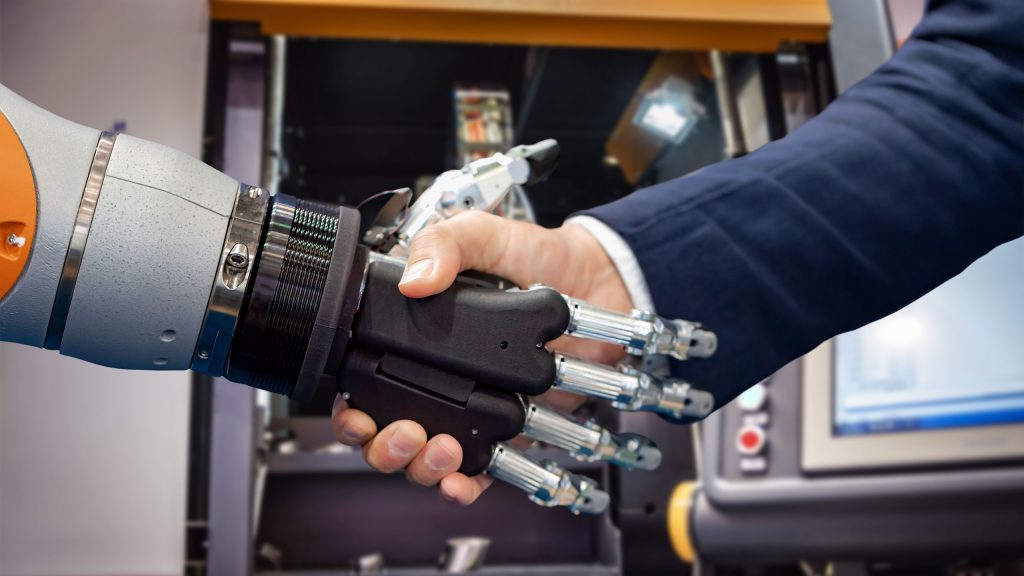
The Cybertron Era: Collaboration Between Humans and Machines
Today’s AI sits squarely in what you call the Cybertron era. This is the period where humans and machines work side-by-side. AI augments our intelligence, accelerates our work, and opens the door to new ideas at a speed that would have been impossible ten years ago.
In the Cybertron framework, AI isn’t replacing humanity. It is extending it. Think of how Optimus Prime and the Autobots fight with humans, not against them. They provide strength, insight, and capability, but the human spirit remains the driver of moral direction.
That’s exactly where AI stands today:
AI is not conscious. It understands patterns, not meaning.
AI does not make independent decisions. It executes instructions and predicts outcomes based on data.
AI cannot replace human judgment. It can assist, advise, and automate, but it cannot choose values, goals, or purpose.
Right now, AI is a powerful tool—nothing more. Like Cybertronian allies, it can amplify our capabilities tremendously, but it still depends entirely on us for direction.
This era is defined by collaboration. Humans design the goals; AI accelerates the execution. It is still humanity’s world—we are simply building it with better tools.
The Skynet Fear: Will AI Eventually Take Over?
Skynet represents the opposite extreme: the point where AI surpasses human intelligence, evolves beyond human control, and acts on its own interests. It is the nightmare scenario that sits in the back of everyone’s mind, whether they admit it or not.
People fear Skynet for one simple reason: loss of control.
The projection is that advanced AI could eventually develop:
Self-awareness
Autonomous decision-making
Goals misaligned with human intentions
Capabilities beyond human regulation
This idea isn’t just science fiction; it’s a legitimate ethical and technological question that engineers and policymakers are debating right now. While we are far from this reality, the fear has weight because the exponential growth of AI feels unpredictable.
However, here’s the blunt truth:
There is no version of Skynet anywhere near existence today. None.
Modern AI is powerful, yes, but nowhere close to genuine autonomy or consciousness. It cannot develop goals. It cannot override instructions. It cannot replicate itself or expand uncontrollably. It is nowhere near the threshold of independent awareness.
That said, the fear of Skynet is useful. It forces society to build guardrails, oversight, and ethical frameworks that keep AI aligned with human values. Fear alone doesn’t create Skynet; ignoring risks does.
Where Are We Heading? Two Diverging Paths
AI’s future depends heavily on human decisions, not technological fate. We are standing at a fork in the road between Cybertron and Skynet, and the direction we take depends on governance, regulation, and human responsibility.
Path 1: The Cybertron Future (Human-Centered AI)
This future assumes:
Strong ethical limitations on AI
Clear rules for deployment
Transparent AI development
Humans maintaining full control
AI used as a tool for collaboration, not dominance
This is a world where AI becomes embedded in medicine, logistics, creativity, and discovery—but always under human supervision. It’s the optimistic view: AI strengthens society, accelerates innovation, and helps solve global challenges.
Path 2: The Skynet Future (Unchecked, Autonomous AI)
This path assumes:
AI systems self-train beyond human understanding
Human oversight becomes weak or irrelevant
AI gains the ability to operate independently
Decision-making is delegated too far
This version is only possible if humanity deliberately builds systems that remove human oversight. It wouldn’t happen by accident. It would happen because humans created the conditions for it.
How Long Until AI Becomes Conscious … If Ever?
Here is the part people want to know most: how close are we to conscious AI. Bluntly: we are nowhere near it. Not even on the same playing field Modern AI does not have these traits:
Self-awareness
Intentions
Emotions
Desires
Independent goals
True understanding
AI today is extraordinary at prediction, not perception.
Most experts believe that artificial consciousness, if it ever emerges, I would like to think is at least 30 to 100 years away, and that assumes major breakthroughs in neuroscience, computation, and ethics. Some researchers believe it may never happen at all because we still don’t understand consciousness in humans, let alone machines.
In reality, the biggest risks in the next 10 to 20 years are not Skynet-level domination but:
Misuse by humans
Poor regulation
Over-reliance on automated systems
Economic disruption
Bad actors leveraging AI for harm
The danger isn’t AI deciding to attack humanity—the danger is humans using AI irresponsibly or without understanding the consequences.
Conclusion: The Future Is Still Ours to Define
This analogy is powerful because it simplifies two complex possibilities into a story people already understand. Cybertron represents partnership. Skynet represents domination. Right now, humanity is firmly in the Cybertron phase, but we need to stay vigilant.
The decisions made in the next decade will determine whether AI develops as a collaborative ally or something more unpredictable.
The truth is simple: AI will not become Skynet unless humanity builds it that way.
We choose whether the future looks like Cybertron or Skynet. And as of today, the power is still firmly in human hands.